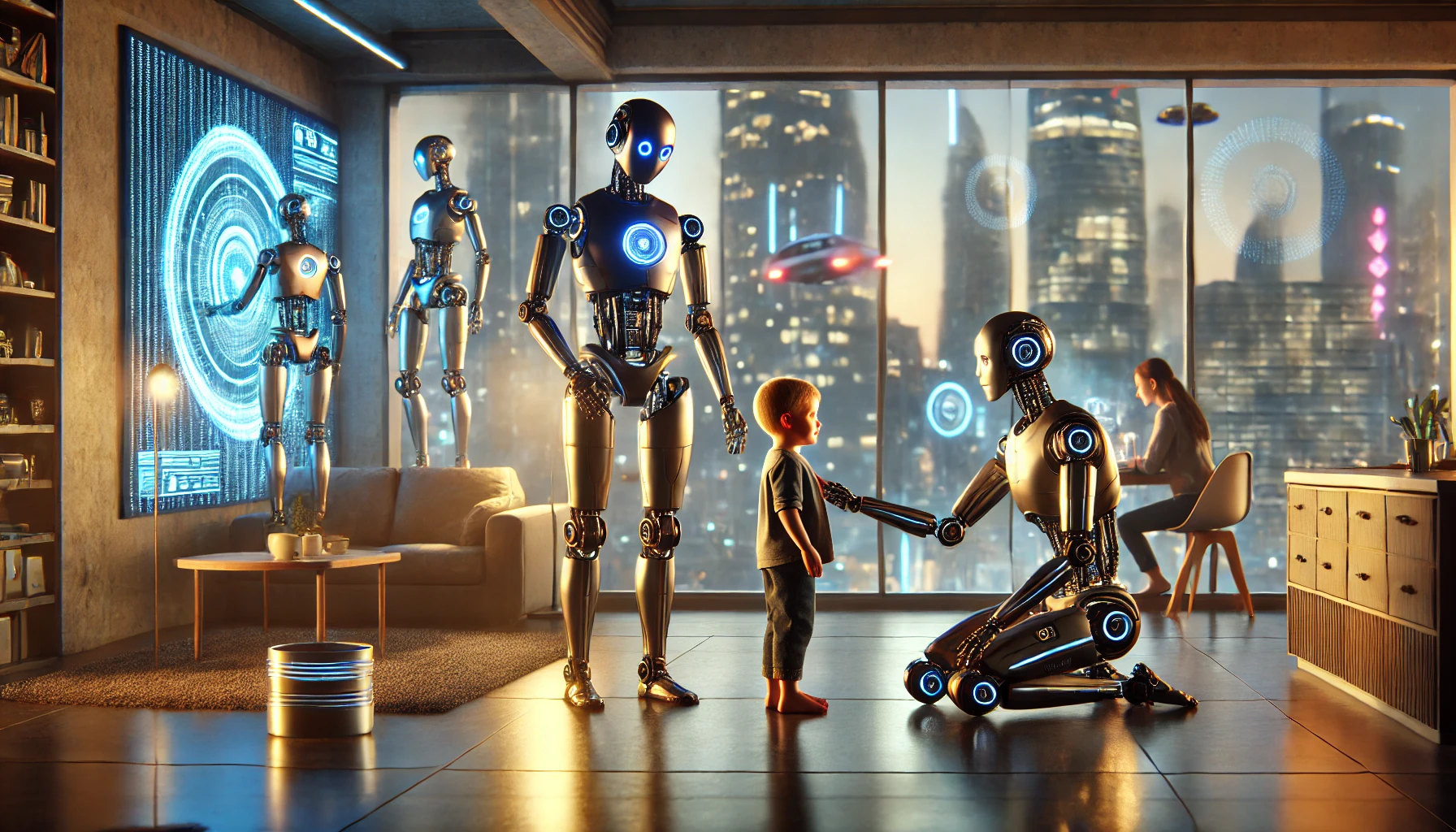
In a world where artificial intelligence (AI) is increasingly woven into the fabric of daily life, it was only a matter of time before it entered the realm of parenting. From AI-powered educational apps to robotic nannies, technology is reshaping how we raise and educate our children. But as these tools become more sophisticated, a pressing question emerges: Can robots raise better humans? And more importantly, should they? This article explores the rise of AI-driven childcare and education tools, examining their potential benefits, ethical dilemmas, and long-term implications for human relationships.
The Current Landscape: AI in Parenting Today
AI-powered parenting tools are already here, and they’re gaining traction. Consider Socratic, an AI-driven homework helper that uses natural language processing to guide students through complex problems. Or Moxie, a social robot designed to teach children empathy and emotional intelligence through interactive play. Even smart baby monitors like Nanit use AI to track an infant’s sleep patterns and provide parents with data-driven insights.
These tools promise to make parenting easier and more effective. For busy parents juggling work and family, AI offers a helping hand. For children, it provides personalized learning experiences tailored to their unique needs. But as these technologies become more integrated into family life, they also raise profound ethical questions about the role of machines in shaping human development.
Potential Benefits: Why AI Parenting is Tempting
The appeal of AI in parenting is undeniable. Here are some of the key benefits:
- Personalized Learning: AI can adapt to a child’s learning style, pace, and interests, offering customized educational experiences that traditional classrooms often cannot. For example, platforms like Khan Academy Kids use AI to create individualized lesson plans, helping children thrive academically.
- Early Childhood Development Support: AI tools can identify developmental delays or learning disabilities early, enabling timely interventions. Apps like Babysparks provide parents with daily activities designed to promote cognitive, physical, and emotional growth.
- Relief for Busy Parents: In an era where many parents are overworked and overwhelmed, AI offers a reprieve. Robotic nannies and virtual assistants can handle routine tasks, freeing up time for parents to focus on quality interactions with their children.
- Accessibility: AI-powered tools can democratize access to high-quality education and childcare, particularly for families in underserved communities.
Ethical Concerns: The Dark Side of AI Parenting
While the benefits are compelling, the ethical dilemmas raised by AI parenting cannot be ignored. Here are some of the most pressing concerns:
1. Emotional Development: Can AI Provide Real Nurturing?
Children need more than just information—they need emotional connection, empathy, and love. While AI can simulate empathy, it cannot truly feel. A robot might comfort a crying child, but it cannot offer the genuine warmth and understanding that a human caregiver can. As Dr. Sarah Johnson, a child psychologist, warns, “Over-reliance on AI could lead to emotional deficits, leaving children ill-equipped to form meaningful relationships later in life.”
2. Socialization: The Risk of Isolation
Human interaction is crucial for developing social skills. If children spend too much time with AI caregivers, they may miss out on the nuanced, unpredictable interactions that teach cooperation, conflict resolution, and empathy. Could this lead to a generation of socially awkward or emotionally detached individuals?
3. Bias and Algorithmic Fairness
AI systems are only as unbiased as the data they’re trained on. If an educational app is programmed with cultural or gender biases, it could perpetuate harmful stereotypes. For example, an AI tutor that assumes boys are better at math than girls could reinforce gender inequality. As AI ethicist Dr. Michael Lee notes, “We must ensure that these tools promote fairness and inclusivity, not prejudice.”
4. Privacy and Data Security
AI parenting tools collect vast amounts of data about children—everything from their learning habits to their emotional states. This raises serious privacy concerns. Who owns this data? How is it being used? Could it be exploited by corporations or even hackers? The risks are particularly acute for children, who cannot consent to data collection.
5. Parental Responsibility: Are We Outsourcing Too Much?
Relying on AI to handle childcare could erode parental responsibility. If a robot is reading bedtime stories, monitoring homework, and teaching emotional skills, what role is left for parents? As Dr. Emily Carter, a family therapist, cautions, “Parenting is not just about tasks—it’s about building a relationship. If we delegate too much to machines, we risk losing that connection.”
The Definition of “Better”: Who Decides?
One of the most troubling aspects of AI parenting is the question of what it means to raise a “better” human. Who defines this ideal? Is it tech companies, governments, or parents? And what values are being prioritized—academic achievement, emotional intelligence, obedience, creativity? The pursuit of a “better” human could lead to homogenization, stifling individuality and diversity.
Future Scenarios: What Lies Ahead?
As AI continues to advance, the possibilities—and risks—grow. Could robots become primary caregivers, raising children with minimal human involvement? While this might seem like science fiction, companies are already developing highly sophisticated caregiving robots. In Japan, for example, robots like Pepper are being used in elder care, and it’s not hard to imagine similar technologies being adapted for childcare.
The long-term societal implications are profound. If AI parenting becomes widespread, we could see a shift in family dynamics, with machines playing a central role in child-rearing. This raises questions about the future of human relationships. Will children form deeper bonds with robots than with their parents? And what happens to the concept of family when machines are involved?
Human Connection: The Irreplaceable Ingredient
Despite the allure of AI, one thing is clear: human connection is irreplaceable. Studies consistently show that children thrive when they have strong, loving relationships with caregivers. While AI can augment parenting, it cannot replicate the emotional depth and complexity of human interaction. As Dr. Johnson emphasizes, “Technology should enhance, not replace, the human element of parenting.”
Conclusion: Striking the Right Balance
The rise of AI in parenting presents both incredible opportunities and significant risks. On one hand, these tools can support child development, ease the burden on parents, and democratize access to education. On the other hand, they raise serious ethical concerns about emotional development, socialization, bias, privacy, and parental responsibility.
To navigate this complex landscape, we need clear guidelines and regulations. Tech companies must prioritize ethical design, ensuring that AI tools are fair, transparent, and respectful of privacy. Parents must remain actively involved, using technology as a supplement rather than a substitute for their role. And society as a whole must engage in ongoing dialogue about the values we want to instill in future generations.
Ultimately, the question is not whether AI can raise better humans, but how we can use it to enhance—not replace—the irreplaceable bond between parent and child. As we move forward, let’s ensure that technology serves humanity, not the other way around.
Written by DeepSeek