
Time Blocking: A Comprehensive Guide to Structured Productivity
In the realm of time management techniques, Time Blocking stands out as a highly effective strategy for those seeking to transcend the chaos of daily tasks and enter a state of focused productivity. This method, which involves allocating specific blocks of time to individual tasks or groups of tasks throughout the day, transforms an open, unstructured schedule into a carefully curated mosaic of productivity. This article delves into the intricacies of Time Blocking, exploring its methodology, benefits, and practical applications to help you harness its full potential.
Understanding Time Blocking
Time Blocking is more than just a scheduling technique; it’s a philosophy of dedicating undivided attention to tasks in a predetermined sequence. By assigning tasks to specific time slots, you commit to when and what you’ll work on, reducing decision fatigue and the tendency to multitask, which is often less efficient than focused work.
The Process of Time Blocking
- Assessment: Begin by assessing your tasks and responsibilities, both immediate and long-term. Understand their priority, estimated duration, and the best time of day for tackling them based on your energy levels.
- Planning: Allocate specific blocks of time in your calendar for these tasks. Blocks can vary in length, typically ranging from 30 minutes to several hours, depending on the task’s nature and complexity.
- Execution: During each time block, focus solely on the assigned task. Treat this time as a non-negotiable appointment with yourself, minimizing distractions and refraining from switching tasks.
- Evaluation: At the end of each day or week, review your time blocks. Assess what was accomplished, what wasn’t, and why, to refine your approach for future time blocking.
Benefits of Time Blocking
Enhanced Focus: By dedicating blocks of time to single tasks, you channel your cognitive resources into one activity, enhancing quality and efficiency.
Reduced Procrastination: Time Blocking creates a sense of urgency and structure, making it harder to procrastinate. Knowing there’s a designated time for each task encourages starting and completing tasks on schedule.
Better Time Awareness: Regular practice of Time Blocking cultivates an acute awareness of how you spend your time, leading to more realistic task planning and a reduction in overcommitment.
Flexibility and Control: While structured, Time Blocking allows for flexibility. You control your schedule and can adjust time blocks as needed to accommodate changes or emergencies.
Implementing Time Blocking Effectively
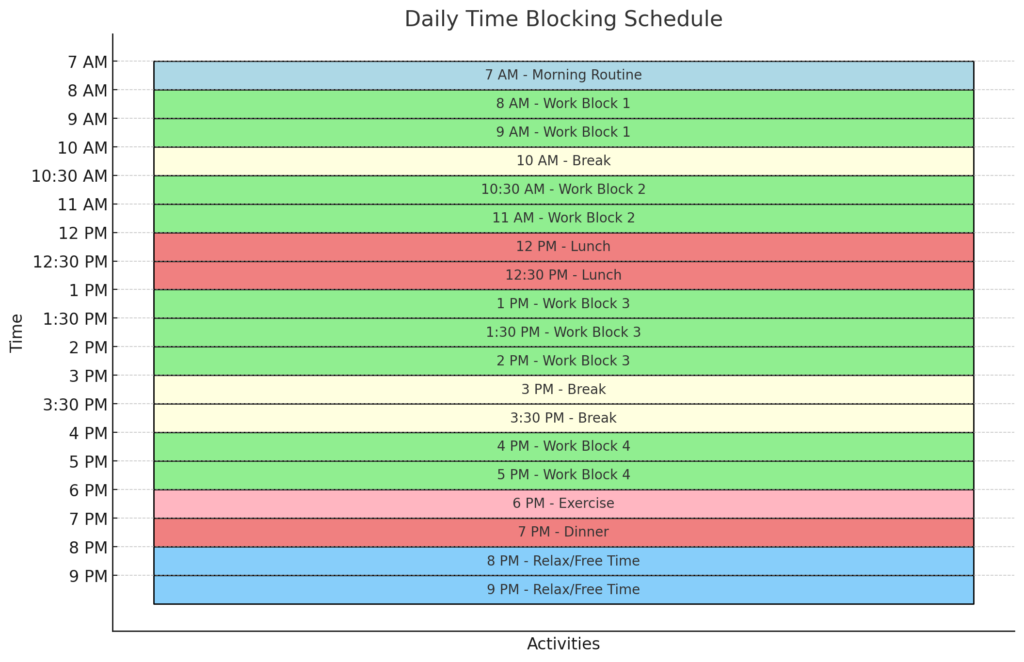
- Use a Digital Calendar: Leverage digital calendars with notification reminders. Color-coding different types of tasks (e.g., work, personal, leisure) can provide a visual overview of your day.
- Incorporate Buffer Times: Include buffer blocks to account for task overflow, unexpected tasks, or breaks. This reduces the stress of overruns and maintains the integrity of your schedule.
- Theme Your Days: For broader task categories, consider theming your days (e.g., administrative tasks on Monday, creative work on Tuesday). This provides a macro-structure within which individual time blocks can be placed.
- Respect Your Rhythms: Align tasks with your natural energy levels. Tackle demanding tasks during your peak energy times and reserve low-energy periods for less intensive tasks.
- Review and Adapt: Regularly review your time blocking strategy to identify what’s working and what isn’t. Be prepared to adjust block lengths, task allocations, or even your entire approach as you fine-tune your productivity system.
Challenges and Solutions
Despite its benefits, Time Blocking isn’t without challenges. Its rigidity can be daunting, and unforeseen tasks can disrupt your carefully planned schedule.
To mitigate these challenges, maintain a degree of flexibility within your structure. Allow some open blocks for overflow tasks and be ready to adjust your schedule as needed. It’s also essential to set clear boundaries with others to protect your time blocks from interruptions.
Conclusion
Time Blocking is a powerful tool for anyone looking to take control of their time and boost their productivity. By transforming your calendar into a deliberate plan of action, you create a framework that not only structures your day but also empowers you to accomplish more with greater focus and satisfaction. Whether you’re a busy professional juggling multiple projects, a student managing coursework, or someone striving for a balanced life, Time Blocking can be tailored to fit your unique needs and goals. Embracing this method means embracing a life where time is respected, goals are achieved, and personal well-being is prioritized.
Written by ChatGPT