
The Myers-Briggs Type Indicator (MBTI) is a personality assessment tool that categorizes individuals into one of 16 different personality types. The MBTI is based on the work of psychologist Carl Jung and was created by a mother-daughter duo, Isabel Briggs Myers and Katharine Cook Briggs. The assessment measures four dichotomies, including extraversion vs. introversion, sensing vs. intuition, thinking vs. feeling, and judging vs. perceiving.
Extraversion and introversion
The first dichotomy of the MBTI is extraversion versus introversion. This dichotomy is one of the most well-known and frequently discussed aspects of the MBTI. It is a measure of how individuals interact with the world around them and how they recharge their energy.
Extraverts are individuals who tend to be outgoing and assertive in their interactions with others. They often enjoy being the center of attention and thrive in social situations. Extraverts tend to have a lot of friends and are often involved in a variety of activities. They enjoy talking and sharing their thoughts and ideas with others. Extraverts are typically energized by social interactions and may feel restless or bored when they are alone for long periods.
Introverts, on the other hand, are individuals who tend to be more reflective and reserved in their interactions with others. They often prefer quieter, more solitary environments where they can focus on their own thoughts and ideas. Introverts tend to have a smaller group of close friends and may be less involved in social activities. They often enjoy reading, writing, or other solitary hobbies. Introverts are typically drained by social interactions and may need time alone to recharge their energy.
It’s important to note that extraversion and introversion are not black and white categories. Many individuals fall somewhere in between these two extremes and may exhibit different levels of extraversion or introversion depending on the situation. For example, an individual may be outgoing and assertive in a social setting but prefer to be alone when they are working on a project.
Understanding the extraversion vs. introversion dichotomy can be useful in a variety of contexts. In the workplace, for example, it can help individuals understand how they prefer to work and communicate with others. Extraverts may thrive in environments where there is a lot of collaboration and social interaction, while introverts may prefer a more independent, quiet workspace. In relationships, understanding each other’s level of extraversion or introversion can help partners communicate more effectively and support each other’s needs.
Sensing and Intuition
The second dichotomy of the MBTI is sensing versus intuition. This dichotomy measures how individuals perceive and process information from their environment.
Individuals who prefer sensing tend to rely on their five senses to gather information from the world around them. They are often practical, detail-oriented, and focused on concrete facts and data. Sensing individuals prefer to deal with the present and the here-and-now, rather than abstract concepts or hypothetical scenarios. They often have a strong memory for specific details and may be skilled at troubleshooting and problem-solving.
In contrast, individuals who prefer intuition tend to rely on their intuition and imagination to gather information. They are often more abstract and theoretical in their thinking, and are drawn to big-picture ideas and possibilities. Intuitive individuals are often future-oriented and may be interested in exploring the potential outcomes of different scenarios. They are often creative and innovative, and may be more comfortable with ambiguity and uncertainty than sensing individuals.
It’s important to note that neither sensing nor intuition is inherently better or worse than the other. Both ways of perceiving information have their own strengths and weaknesses. Sensing individuals may be better at dealing with concrete details and practical problem-solving, while intuitive individuals may be better at envisioning and exploring possibilities.
Understanding the sensing vs. intuition dichotomy can be useful in a variety of contexts. In education and career development, it can help individuals understand how they prefer to learn and work. Sensing individuals may be more interested in fields such as engineering or accounting, which require a focus on detail and practical problem-solving. Intuitive individuals may be more interested in fields such as art or entrepreneurship, which require creativity and a willingness to take risks.
In relationships, understanding each other’s preferences for sensing or intuition can help partners communicate more effectively and appreciate each other’s strengths. Sensing individuals may appreciate the practicality and attention to detail that their intuitive partners bring, while intuitive individuals may appreciate the creativity and vision of their sensing partners.
Thinking and Feeling
The third dichotomy of the MBTI is thinking versus feeling. This dichotomy measures how individuals make decisions and evaluate information.
Individuals who prefer thinking tend to make decisions based on objective facts and logical analysis. They value rationality and often prioritize achieving their goals over considering other people’s feelings or opinions. They are often direct and honest in their communication, and may be perceived as being blunt or insensitive at times. Thinking individuals are often drawn to fields such as science, engineering, or finance, which require analytical thinking and problem-solving skills.
In contrast, individuals who prefer feeling tend to make decisions based on subjective values and personal beliefs. They prioritize harmony and empathy in their interactions with others, and may prioritize the needs of others over their own goals or desires. Feeling individuals are often skilled at understanding and navigating interpersonal dynamics, and may be drawn to fields such as education, counseling, or social work.
It’s important to note that neither thinking nor feeling is inherently better or worse than the other. Both ways of evaluating information have their own strengths and weaknesses. Thinking individuals may be more skilled at making objective decisions and achieving their goals, while feeling individuals may be more skilled at navigating interpersonal relationships and understanding the needs of others.
Understanding the thinking vs. feeling dichotomy can be useful in a variety of contexts. In the workplace, it can help individuals understand how they prefer to communicate and make decisions. Thinking individuals may be more comfortable with direct, fact-based communication, while feeling individuals may be more skilled at navigating complex interpersonal dynamics. In relationships, understanding each other’s preferences for thinking or feeling can help partners communicate more effectively and appreciate each other’s strengths.
Judging and Perceiving
The fourth dichotomy of the MBTI is judging versus perceiving. This dichotomy measures how individuals approach the external world and structure their lives.
Individuals who prefer judging tend to approach the world in an organized, planned, and structured manner. They prefer to have a clear plan of action and may feel uncomfortable with open-ended or ambiguous situations. They often set and work towards specific goals, and value punctuality and deadlines. Judging individuals are often drawn to fields such as law, management, or project management, which require a high level of organization and structure.
In contrast, individuals who prefer perceiving tend to approach the world in a more flexible and spontaneous manner. They prefer to keep their options open and may feel constrained by too much structure or routine. They often enjoy exploring new ideas and experiences, and may be skilled at adapting to changing circumstances. Perceiving individuals are often drawn to fields such as art, entrepreneurship, or research, which require creativity and a willingness to take risks.
It’s important to note that neither judging nor perceiving is inherently better or worse than the other. Both ways of approaching the external world have their own strengths and weaknesses. Judging individuals may be more skilled at setting and achieving specific goals, while perceiving individuals may be more skilled at adapting to changing circumstances and finding creative solutions to problems.
Understanding the judging vs. perceiving dichotomy can be useful in a variety of contexts. In education and career development, it can help individuals understand how they prefer to structure their lives and work. Judging individuals may be more comfortable in structured, goal-oriented environments, while perceiving individuals may prefer more flexibility and autonomy. In relationships, understanding each other’s preferences for judging or perceiving can help partners navigate differences in planning and decision-making.
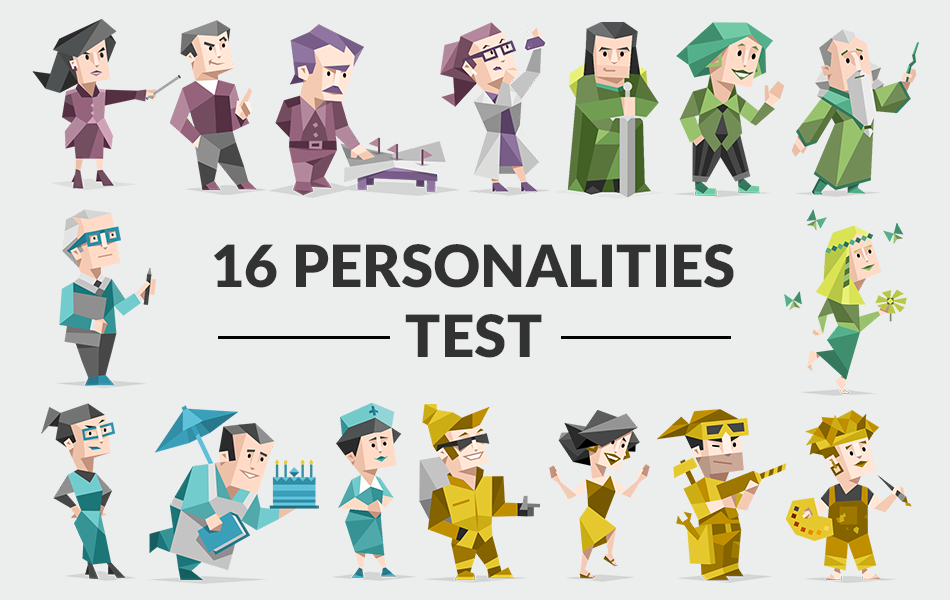
The MBTI is a widely-used personality assessment tool that has had a significant impact on our current society. Although the MBTI has its critics and limitations, it remains a popular tool for personal and professional development, team building, and career guidance. Understanding how to use the MBTI effectively can provide valuable insights into individual differences and enhance our ability to work and communicate with others.
One way the MBTI impacts our society is in the workplace. Many companies use the MBTI as a tool for team building and professional development. By understanding the personality types of their employees, companies can create more effective and cohesive teams, improve communication, and increase productivity. For example, a team composed of individuals with complementary personality types may be better equipped to handle complex projects, as each team member brings unique strengths and perspectives to the table.
The MBTI also impacts our society in education and career development. Understanding one’s own personality type can help individuals choose careers that align with their strengths and interests. For example, a person with a preference for intuition and creativity may be well-suited for a career in the arts or design, while a person with a preference for logic and analysis may be well-suited for a career in engineering or finance. By using the MBTI to guide career decisions, individuals can increase their job satisfaction and fulfillment.
However, it is important to use the MBTI appropriately and with caution. The MBTI is not a perfect tool, and it is important to recognize its limitations. For example, the MBTI does not account for cultural or environmental factors that may influence personality development, and it may oversimplify the complexity of individual personality. Additionally, it is important to avoid using the MBTI to make assumptions or judgments about individuals or to limit their potential based on their personality type.
Instead, the MBTI should be used as a starting point for self-reflection and understanding. By recognizing our own personality preferences, we can gain insights into our strengths and weaknesses, improve our communication and collaboration with others, and develop strategies for personal growth and self-improvement. Additionally, by recognizing the personality preferences of others, we can increase our empathy and understanding of others, and build stronger relationships and communities.
In conclusion, the Myers-Briggs Type Indicator has had a significant impact on our current society, particularly in the areas of workplace productivity and career development. While it is important to recognize the limitations and potential misuse of the MBTI, it can be a valuable tool for personal and professional growth when used appropriately. By understanding our own personality preferences and those of others, we can build stronger relationships, improve communication, and enhance our ability to work effectively with others. The MBTI is a useful tool for understanding and appreciating individual differences. By recognizing our own strengths and weaknesses, we can better understand how to communicate and interact with others. If you’re interested in learning more about your own personality type, I would encourage you to visit https://www.16personalities.com/ and take the MBTI assessment.
Written by ChatGPT